
Searching Clinton County Civil Dockets
Indiana MyCase should be your first stop for Clinton County civil docket records. The free site pulls public Odyssey case information straight from Clinton Circuit and Superior Courts. A cause number works best. Type it in exactly and the case comes up clean. Without a number, search by individual party or business name, then narrow things down. Set the court to Clinton County. Pick Civil or the right Family or Probate category. Add a status or filing-date range if you know one. The search screen gives you plenty of levers. Case number, party name, business name, attorney, court, category, status, and filing dates are all there. A plain name search can drag in unrelated cases. Sounds-like matching widens the net even more. Before you open a record, check the case style, court, type, filing date, and status. Be sure it is the right one.
- Search the exact cause number, with hyphens and leading zeroes when known.
- For a name search, use the right individual or business path and select Clinton County.
- Narrow by category, court, open or closed status, and filing dates.
- Open the matching case and read the newest CCS, settings, orders, and judgment entries.
- Ask the Clerk of the Circuit Court for a missing pleading, certified judgment, or verified balance.
The official MyCase search tips explain wildcard and result-limit rules.
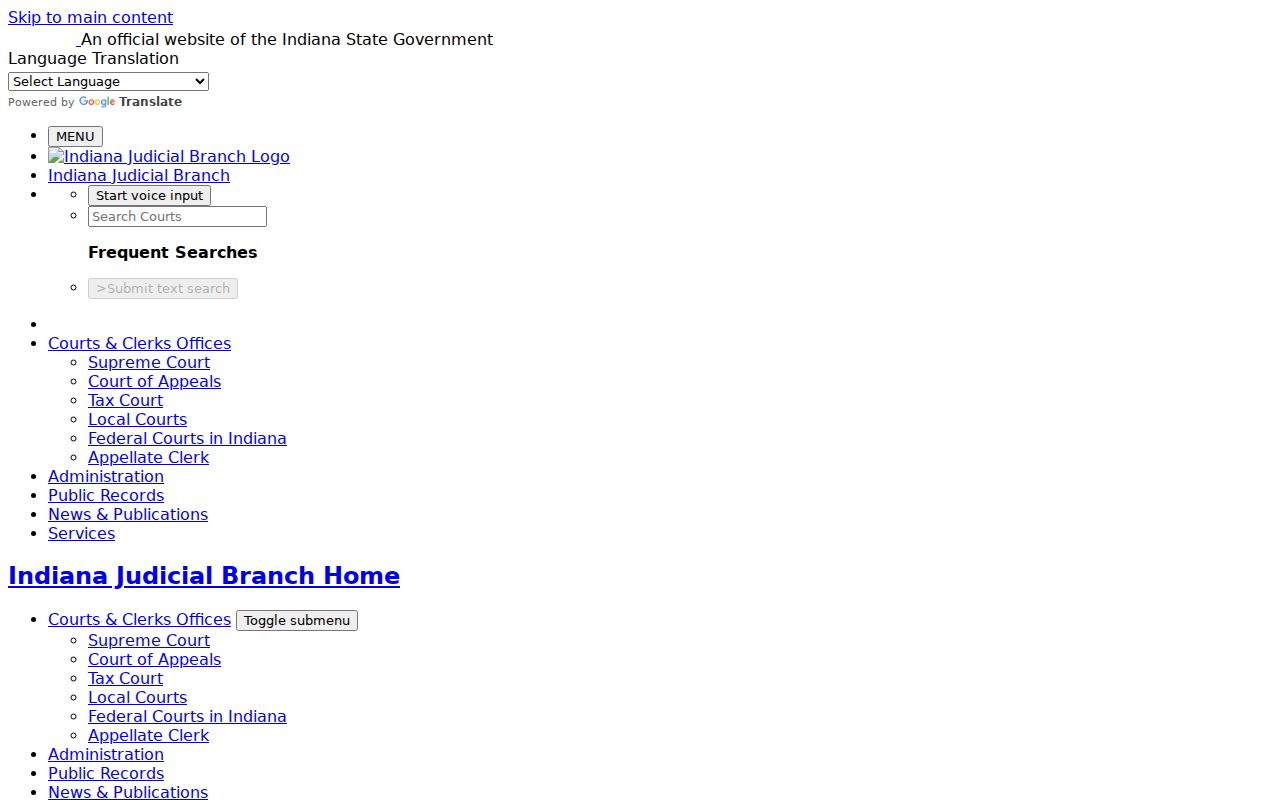
The help screen makes the same point in plainer terms. A narrow Clinton County civil docket query beats a sweeping name search every time.
Clinton Civil Docket Search Fields
MyCase splits its search tools three ways: individual, business, and attorney. Every query needs at least one valid search key before it will run. For an individual, date of birth is an optional field that sharpens the results, not a way to fish for cases in bulk. Attorney bar number works if you would rather skip typing a lawyer's name. Advanced options open up the status and filing-date controls.
| Field | Use | Clinton search note |
|---|---|---|
| Case Number | Exact file lookup | Best first key; a transfer may produce another number. |
| Party Last Name | Individual search | Required on that path; first and middle names are optional. |
| Business Name | Entity search | Use separately from the individual-name path. |
| Court | Geographic filter | Select Clinton County and confirm Circuit or Superior in the result. |
| Case Category | Type filter | Civil, Family, and Probate are separate portal groups. |
| Status and Dates | Result narrowing | Choose open, closed, or all and a sensible filing range. |
The official Odyssey courts list confirms the participating Clinton courts and their identifiers.
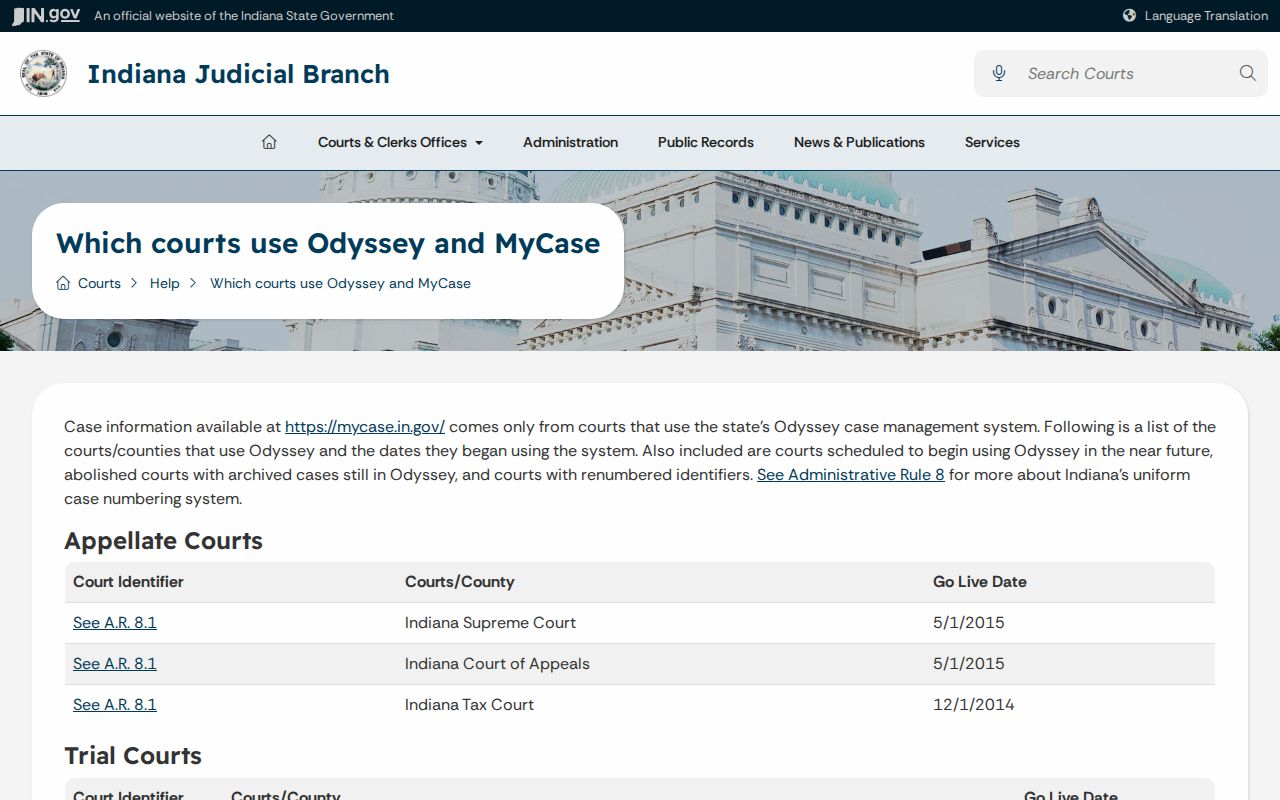
Coverage explains the convenience here: one statewide portal hands you Clinton County trial-court dockets from both courts. The case code still tells you which court keeps the record.
Inside a Clinton Civil Docket
The official Indiana docket is the Chronological Case Summary, or CCS. It lists each event in order as documents arrive and judicial acts occur. A later corrective entry fixes an error. The Record of Judgments and Orders, or RJO, indexes formal orders and judgments. The case file holds the documents behind each event.
| Header | Court and code, cause number, style, case type, filing date, status, judge, and location. |
|---|---|
| Parties | Plaintiff or petitioner, defendant or respondent, intervenor, attorney, and role. |
| Opening and Service | Complaint or petition, summons, waiver, return of service, appearance, answer, and counterclaim. |
| Motions and Orders | Discovery events, dismissal or summary-judgment motions, continuances, signed orders, and rulings. |
| Hearings | Event type, date, time, location, result, reset, and any public order link. |
| Judgment | Default, agreed, or final judgment, dismissal, damages, costs, satisfaction, execution, or appeal. |
The live MyCase search displays the route into those public case summaries.
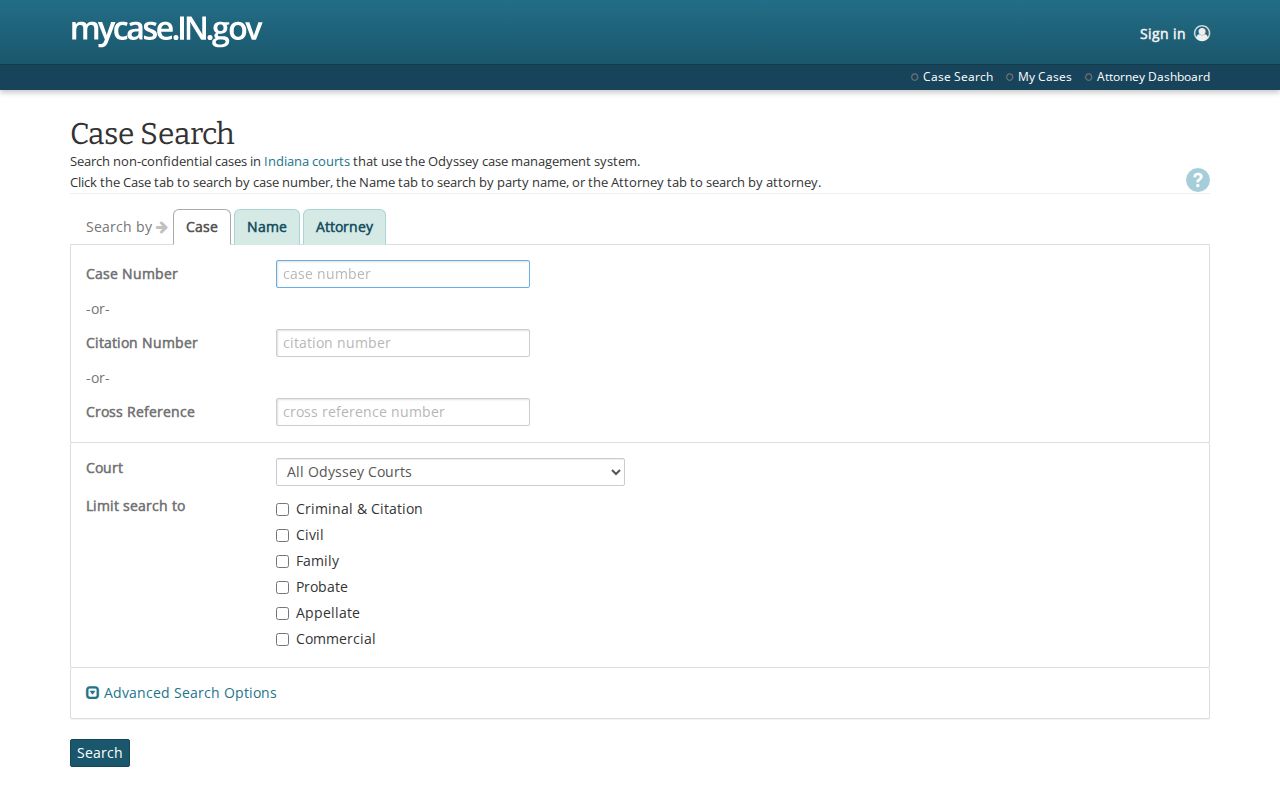
Treat the search screen as a finding tool, nothing more. For official Clinton County civil court records, the clerk's CCS and the signed documents on file are what count.
Clinton Motions and Signed Orders
A motion is only a request. It asks the judge to act. A docket line showing it proves nothing about whether the court said yes. Trace the case forward instead. Follow the filing through any response and the hearing. Then watch for the minute entry and finally the signed ruling. A complaint works the same way. The docket entry does not confirm service, default, or judgment, only that someone filed a claim.
Use the sequence. Complaint → Service → Answer → Motion → Hearing → Signed Order → Judgment or Dismissal.
Party roles matter. Plaintiff, petitioner, defendant, respondent, intervenor, and attorney are not interchangeable. Read the role block before relying on the caption. To judge judgment status, look at post-judgment entries. Abstract, execution, garnishment, writ, satisfaction, or appeal all count. A public CCS line may summarize a ruling without the full image. When you need proof, request the signed order or a certified judgment. The Clerk of the Circuit Court serves as record custodian. That clerk covers both Clinton County trial courts.
Civil Case Types on the Docket
Clinton County's local allocation rules expressly route small claims and evictions to Superior Court. Other civil matters can be designated to Circuit or Superior through the filer and local-rule process. No published local dollar threshold applies, and none should be borrowed from another county.
- CC: civil collection.
- CT: civil tort.
- SC: small claim, routed locally to Superior.
- EV: eviction, routed locally to Superior.
- MF: mortgage foreclosure.
- MI: miscellaneous civil.
All sorts of civil matters show up in Clinton County court records. Contract fights share the docket with debt collection and property lines. Tort injury claims, probate disputes, and a general miscellany fill out the rest. Family matters like dissolution and paternity file under family codes. Those files often come with tighter access rules. To pin down the true venue, read the cause number, the court header, and the case type together.
Note: A case code such as SC or EV only routes the file. It does not tell you who won the Clinton County civil case.
Clinton Small Claims and Evictions
Small claims and evictions in Clinton County sit in Superior Court, not Circuit. The Clinton local rules make that assignment. Skipping the link between court and case type is a common search mistake. A docket search that only looks at Circuit will miss these files. The cause number tells you where you are: 12D01 means Superior. 12C01 means Circuit.
Read a small-claim or eviction docket in order. Confirm service first, since later entries only make sense once the other side was notified. A requested default is not the same as an entered default judgment. After judgment, watch what follows. The court docket may show collection efforts, garnishment, a writ, payment, satisfaction, or an appeal. A satisfied judgment and a dismissed complaint are two different endings.
Infractions and ordinance violations go to Superior too. They sit under the same local rule. Those dockets track civil violations, though, not ordinary contract or property suits. The case type and the event text keep them distinct.
Clinton Civil Docket Settings
What lands on a Clinton County civil docket? Status conferences, motion hearings, mediation, bench or jury settings, and post-judgment matters. MyCase shows the date, time, judge, location, result, plus a linked CCS entry. The county clerk's "Look up Hearing" tab adds a Doxpop calendar cross-check. That cross-check never substitutes for the CCS. It does not replace a signed order either.
Hold onto your summons or notice. Read the newest setting and any continuance order before anything else. When a hearing is near, call Circuit at 765-659-6345 or Superior at 765-659-6341. The county also lists 765-659-6340 for Superior. Confirm the date, time, and place. Ask whether the setting moved, and whether you must appear.
Why might an event be missing from the calendar? The case could be confidential. It may not be entered yet, converted from an older system, or kept off public display. And an old event card never outranks a new signed order.
Clinton Civil Filings in 2024
Clinton County courts took in 1,719 new civil filings during 2024, according to the certified ICOR report. The same report counts 1,141 civil violations on a separate line. The breakdown: 1,134 infractions and seven ordinance violations. Those categories matter. They prove a civil docket is not one uniform stream of cases.
Treat these figures as workload counts. They are not headcounts and not predictions. Superior carried a heavy civil and noncriminal load on top of its assigned small-claim, eviction, infraction, and ordinance work. Filtering by a narrow case type keeps those records from blurring together.
Clinton Civil Docket Record Channels
Start with MyCase for public Odyssey information. Doxpop adds a vendor search and a county-linked hearing channel, but it states plainly that it is not the official record. For anything not online, the Clerk of the Circuit Court handles non-online pleadings, certified judgments, RJO entries, and current financial status. Old suits, divorces, and probate material go through Clinton County Archives when the clerk points you there. Need a transcript? That comes from the court reporter.
Put the essentials in writing. List the court, cause number, exact document and date, plain or certified copy, your contact details, and delivery instructions. Call the clerk before mailing anything. The county publishes no official civil-copy form, and the clerk must confirm the fee, payment method, address, and timing.
The official MyCase help page spells out what the online docket covers and where it stops.
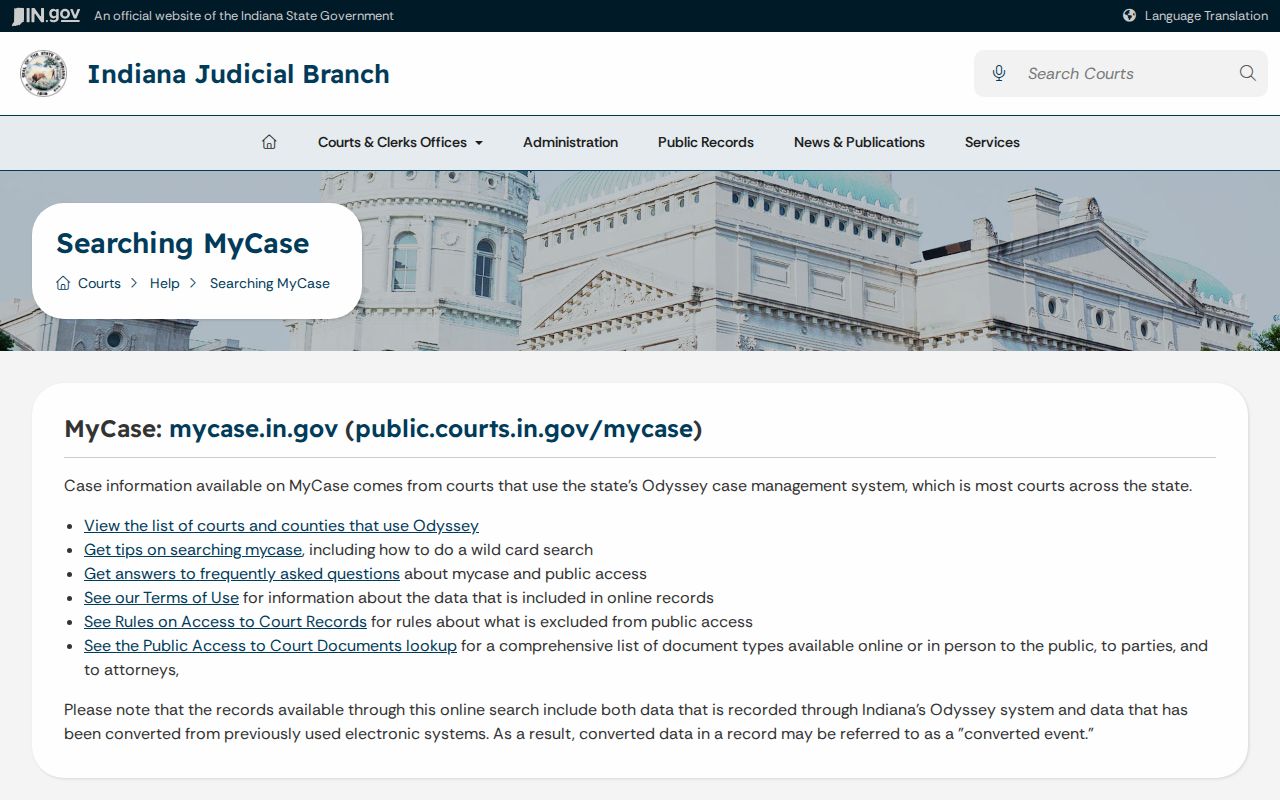
The help page also covers the fallback. When a court document is not online, contact the clerk in the county where the case is heard.
Civil Docket Access Rules
Indiana starts from openness. Access Rule 4 presumes public access, limited by statutes, rules, sealing orders, and stated exclusions. Access Rule 5 then shields whole categories of cases and records: confidential, sealed, juvenile, protection-order, mental-health, and investigative material. Dissolution and other family files can carry document limits. That can hold even where some case information stays public.
Access path: Search the public summary, ask the clerk for a public or redacted copy, and use Access Rule 9 only for a verified extraordinary-access request to the court with jurisdiction.
The MyCase access matrix compares public, party, and attorney document availability by case type.
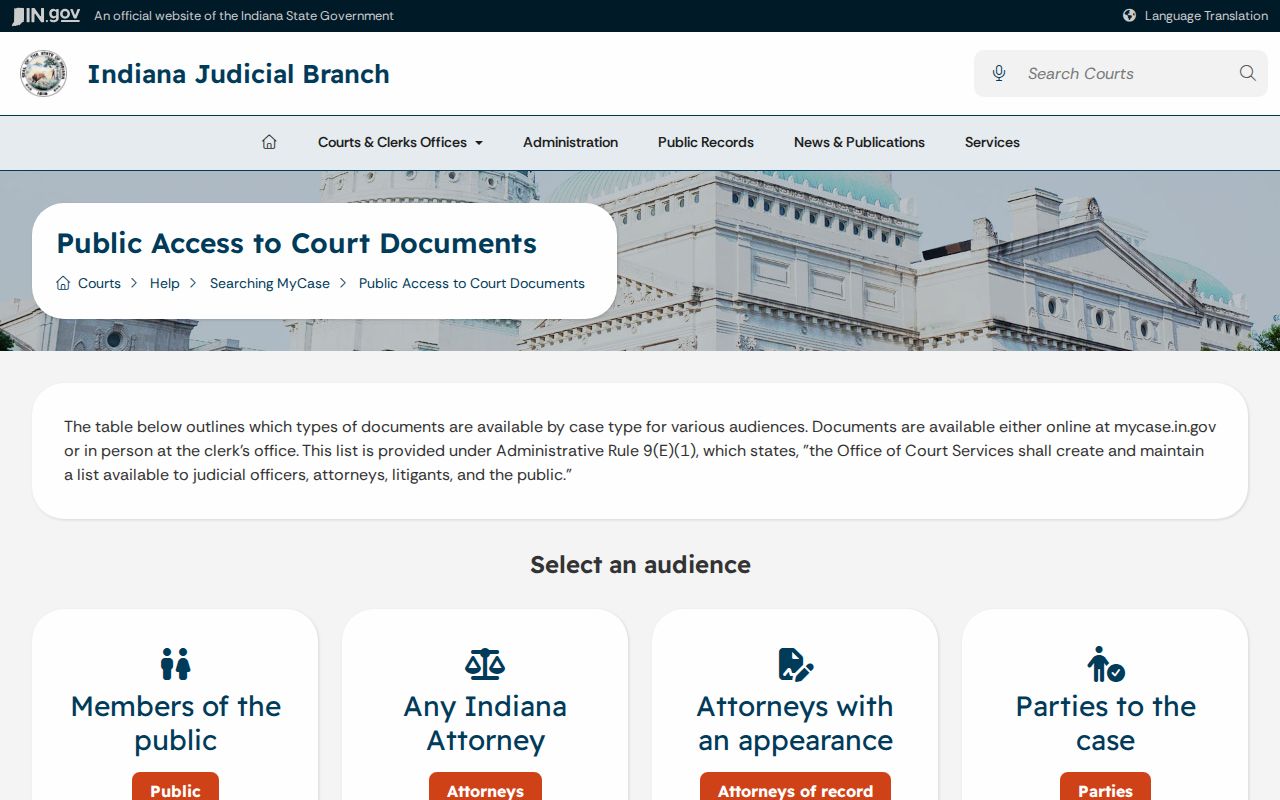
That matrix explains a puzzle many searchers hit. An online event can appear with no public document link attached.
Parties have another route. A person may request an account access code for documents tied to their role, and the official party-access instructions walk through that process.
Party access is role-based. It never turns a sealed filing into a public record. Indiana Code 5-14-3 supplies the general public-records framework, while court files also answer to Supreme Court Access Rules and Trial Rule 77.