
Getting Clinton County Court Records
Begin with Indiana MyCase if you know a cause number or party name. It shows public Odyssey information. Clinton Circuit Court, Clinton Superior Court, and Frankfort City Court all appear there. A result can reveal the court. It may also show the CCS event and a document date. Not every filed image is online, though. For county trial-court records, the Clerk of the Circuit Court remains the keeper.
- Search MyCase and save the cause number, court, document title, and entry date.
- Open a public document link, or note the CCS entry that names the item.
- Call the clerk at 765-659-6335 to confirm access, current cost, delivery, and mailing address.
- Inspect or request the record at the counter, or mail a precise request after confirming payment.
- Use Archives for historic files and the court reporter for a transcript.
Send a single-case public-record request to the local clerk. Bulk or compiled data is different. That runs through the Indiana Office of Judicial Administration under Administrative Rule 9. Doxpop may turn up an entry, but treat it as a vendor source rather than a certified record.
Three Clinton Record Layers
Three layers serve three different needs: a CCS, a filed document, and a certified copy. The CCS is the time-ordered index. It covers filings, settings, rulings, and judgments. Behind each entry sits the actual item. It may be a complaint, motion, exhibit, or order. A certified copy is the clerk-authenticated reproduction of any of it. A saved screen does not become certified. That is true even when it came from a court portal.
CCS The Chronological Case Summary, the official record of events in sequence. Filed document The paper or electronic object named by an entry. Certified copy A copy bearing the clerk's certification for formal use.
This layering speeds up a narrow request. Ask the Clinton County clerk for a named order tied to a dated CCS entry, not everything in a thick file.
Court Record Types
Trial Rule 77 puts a broad set of records with the Clerk of the Circuit Court. Circuit, Superior, and probate matters all fall under that clerk. That includes the CCS, pleadings, motions, nonconfidential orders, judgments, execution records, indexes, and parts of the case file. Probate records follow the same unified clerk structure. There is no separate Superior Court clerk. The court controls its own judicial acts in a Superior case.
- Chronological Case Summaries and public case files
- Complaints, answers, motions, and service records
- Signed orders, judgments, and RJO material
- Public criminal, civil, family, and probate items
- Historic lawsuits, divorces, guardianships, probate, and criminal indexes
Transcripts work differently. A court reporter makes the spoken record of a hearing. Ask the court for that reporter's contact, a production estimate, and any deposit terms.
MyCase Links Vary by Case
Why does one Clinton County case let you click through to documents while a twin case shows nothing but a list of events? The official MyCase access matrix answers that question directly. Criminal dockets tend to be the most open. Final orders, sentencing orders, and other nonconfidential orders often appear online. Family law, juvenile matters, adoptions, and protection orders face much tighter limits instead. Parties to a case can go further. They set up an Indiana Courts account and use an access code tied to their own matter. Attorneys get a role-based level of entry.
Behind every current court file sits a filing framework. The electronic filing rule lays it out. What that rule spells out is how filings move into the record in the first place.
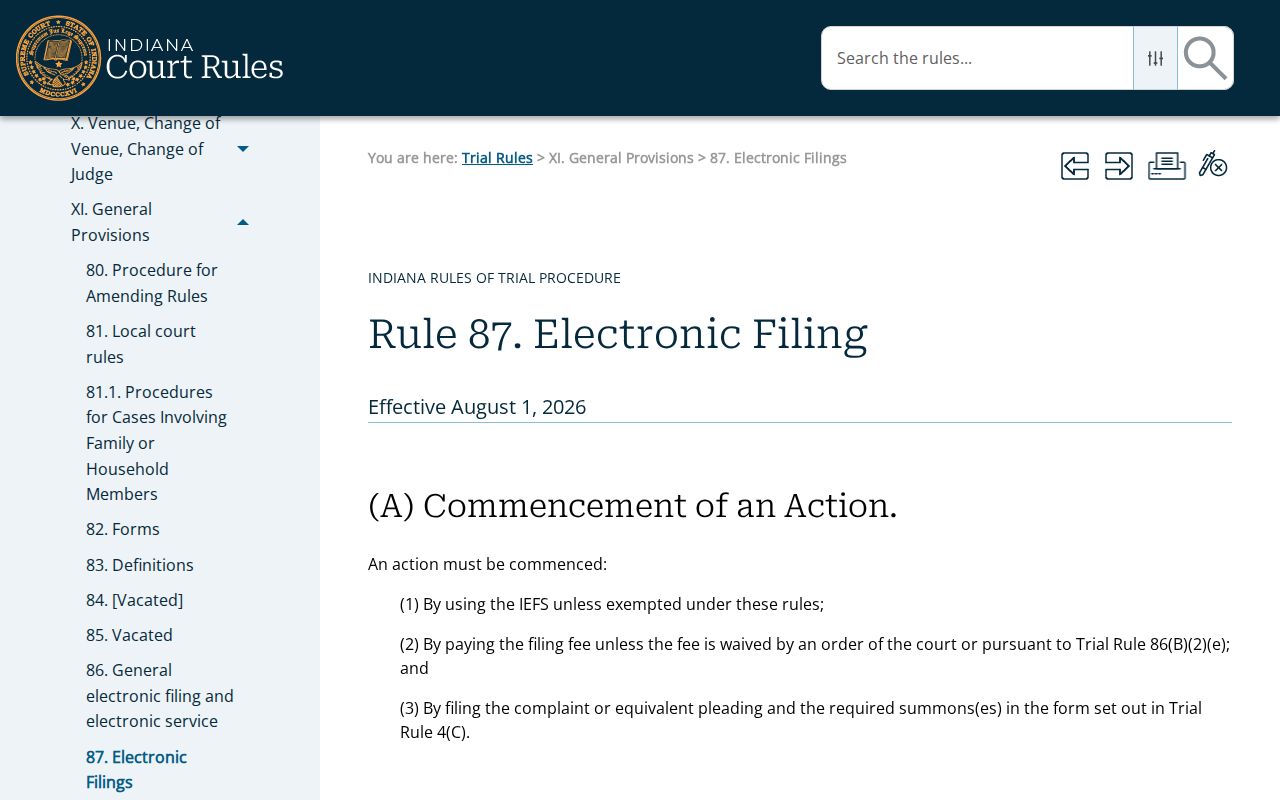
The filing system delivers material to the court. Public access still turns on record rules and the user's role. When something is not online, the Clinton County clerk can check whether inspection or a copy is allowed.
Inside a Clinton County Court Record
A case file combines identifying fields with documents and court acts recorded over time. Clinton County cause numbers can identify county 12. They also carry the court code, filing date, case type, and sequence. One more thing: corrective CCS entries are added later, not quietly swapped in for old ones. Read the full sequence.
| Cause number | County, court, date, type, and sequence, such as a 12C01 or 12D01 case. |
|---|---|
| Parties and counsel | Public names, roles, appearances, and attorney information when not excluded. |
| CCS | Filed items, service, settings, rulings, judgment, and corrective entries. |
| Orders and judgments | Signed rulings and RJO or order-book references. |
| Documents | Public pleadings, motions, and exhibits when inspection or an online link is allowed. |
The CCS tells you what happened. It may not reproduce the whole document, and a portal balance can lag behind the clerk's ledger, which controls the current amount.
Clinton Archives Request Route
A case from the nineteenth or twentieth century may never appear in MyCase. Clinton County Archives lists old holdings. Divorce, lawsuit, criminal, guardianship, and probate records all appear there. Records dating to 1830 moved to the library during the 2000 remodel. The move allowed indexing and storage. That remodel created a real split. Live courthouse files and archive material went separate ways. Archives sits at 2 E Washington Street, Suite 003, Frankfort. Call 765-659-6369. You can also visit Tuesday through Thursday, 8:00 a.m. to 4:00 p.m. A mailed request should give the record type. Add names or index details and the date range. The office notifies the requester first. It states the amount owed before anything is mailed. This is the documented mail route for historic Clinton County court records. Indiana Court Online Reports offers aggregate court statistics, not named case files.
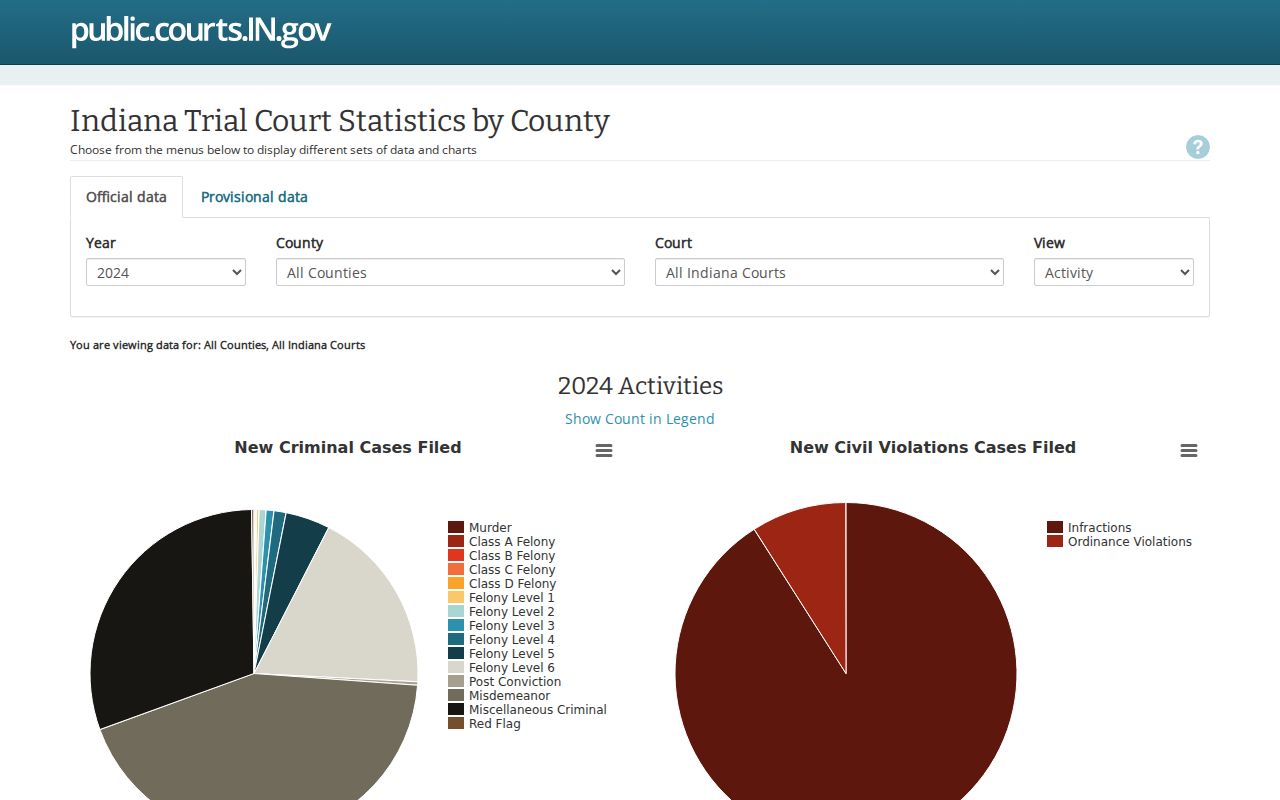
That statistics portal explains volume, but a named record still comes from MyCase, the clerk, or Archives.
Fees and Certified Copies
A plain copy just reproduces the record. Certification adds the clerk's authentication, which costs more. Indiana's general fee sources list one dollar per page and one dollar per certificate, but let the clerk confirm the current total, postage, payment method, and any special charge. The Indiana Trial Court Fee Manual gathers the governing references.
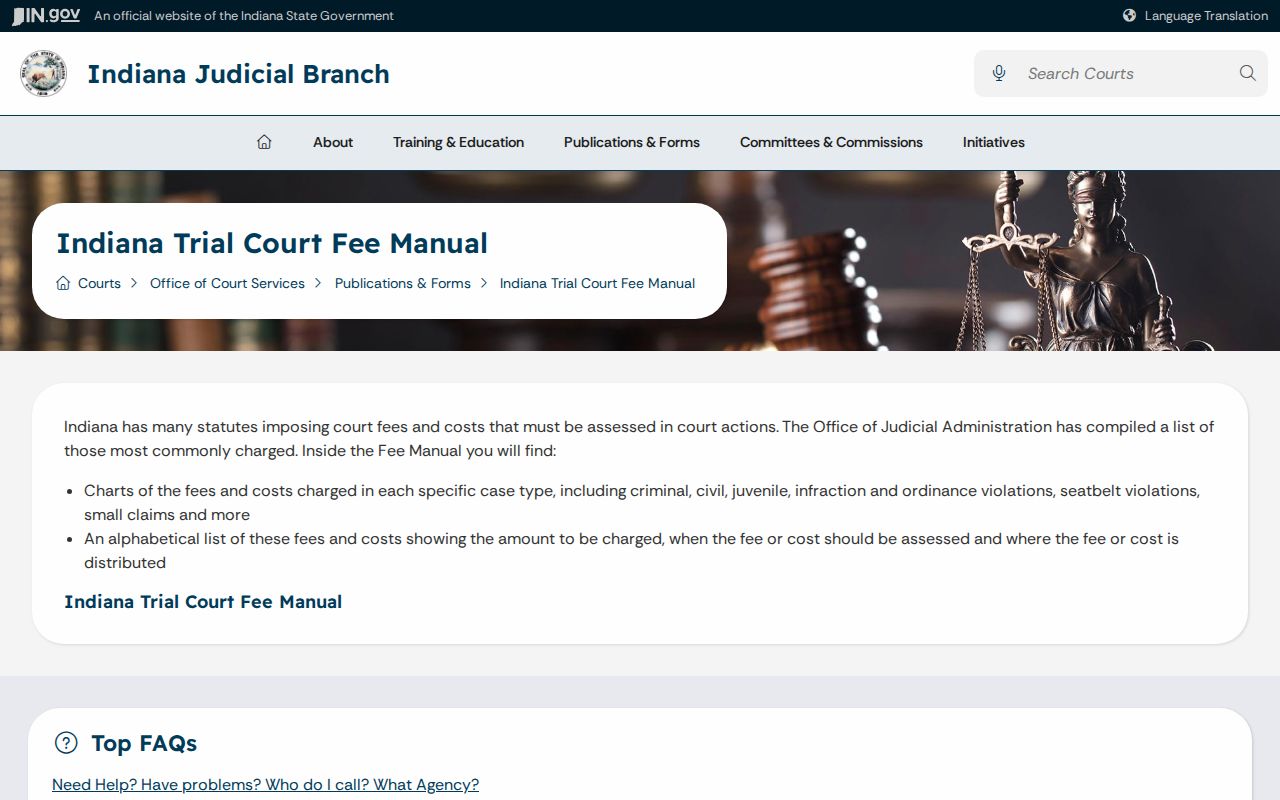
It separates statutory copy charges from vendor document fees and reporter transcript costs. Those are not the same transaction.
| Item | Published amount or status |
|---|---|
| Standard copy | $1 per page under IC 33-37-5-1; confirm with clerk |
| Clerk certification | $1 per certificate under IC 33-37-5-3, plus copy pages |
| Archives request | $1 base, $1 each copy, plus mailing |
| Transcript | Clinton-specific rate not published; ask court reporter |
| Bulk data | Written OJA quote or terms; not a one-case copy |
Write a Precise Clinton Request
No single certified-copy form covers everything in Clinton County, so your written request has to do the work. Spell out the court. Add the cause number if you have it, the record type, and the document date or date range. Say whether you want a plain copy or a certified one. Include your contact details. Mention how you want delivery handled, and add a note that you will pay the quoted copy and postage cost. One caution: official pages list two different addresses, 265 Courthouse Square and 2 E Washington Street, Suite 304. Call the clerk before you mail anything.
Clerk of the Circuit Court
2 E Washington St., Suite 304
Frankfort, IN 46041
765-659-6335
Monday-Friday, 8:00 a.m.-4:00 p.m.
At the counter, hand over those same details. If you do not know the cause number, the Clinton County case lookup will find it before you make the request.
Clinton Copy Law in View
The clerk computes the transaction total. For the per-page amount, the Indiana Code copy-fee provision is the official source to check.
This state rule does not open every Clinton County record. Access Rules still decide what may be seen, copied, redacted, or withheld.
Sealed Records and Public Access
Indiana Access Rule 4 starts from a presumption of public access. Access Rule 5 then sets out exceptions. It covers sealed, confidential, juvenile, adoption, and protection material. Administrative Rule 9 handles electronic access, daily calendars, and bulk requests. Keep in mind that an expungement or sealing order can change what stays visible. Leave sensitive facts out of an ordinary public request.
Key Rules:
Access Rule 4 states the public-access baseline.
Access Rule 5 identifies excluded records.
Access Rule 9 supplies a court procedure for extraordinary access.
Want a record the docket keeps sealed? You have to ask the court itself and state your reason. The Clinton County clerk can point you to the right filing steps, but a judge alone decides whether sealed case records open to you.